on discernment, on dislocation
the children the children the children

Our landscape is its own monument: its meaning can
only be traced on the underside. It is all history.
—Edouard Glissant, Caribbean Discourse, 1989

Sea is History.
—Dereck Walcott

The unity is sub-marine.
—Edward Kamau Brathwaite
Bay Area residents (& guests) are welcome to attend the film screening on Sunday, February 15, 2026 at Nomadic Bookshop in Oakland, CA at 5pm. Event details here. **As this event has already happened, you are invited to see/witness these films here.
Reading resources for «Camino de Lava» by Gretel Marín (Cuba), «Dulce» by Guille Isa & Angello Faccini (Colombia), and «1402 Pork n’ Bean Blue» by Roscoè B. Thické III (Miami, FL) :
Interview: Gretel Marín. September 2026.
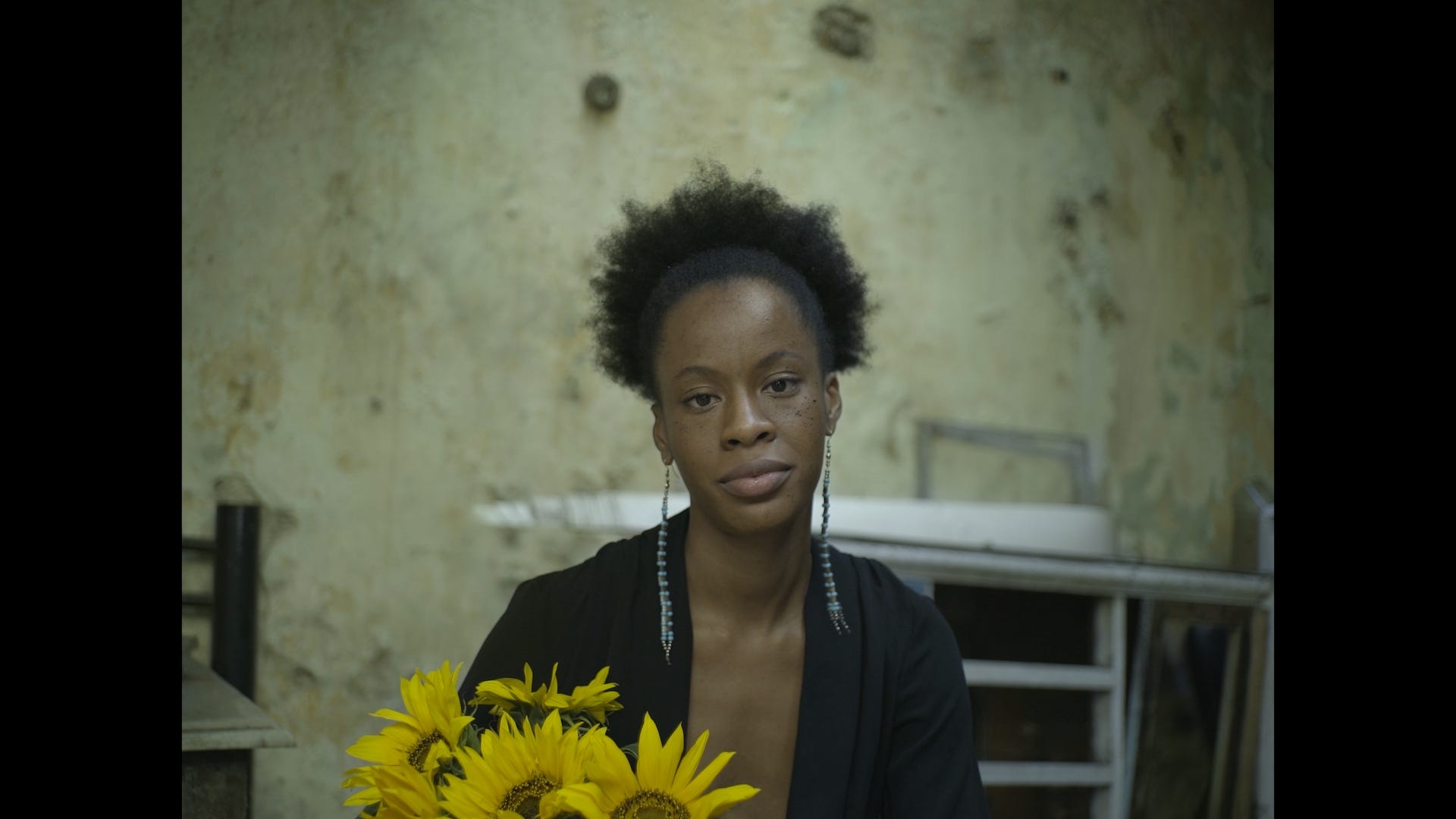
Gretel Marín, Cuban filmmaker: “Just because we are Black or of Black descent and have a certain level of awareness, it doesn’t mean we are free from falling into the trap of racism.”
\
Places to be young: The dispossession of public space in Old Havana by Joanna Kocsis, Professor in Geography and Planning at the University of Toronto. May 2024.
“The touristification of Old Havana is resulting in unique patterns of gentrification that rely on a new spatial imaginary, the enforcement of which is resulting in the loss of places for residents to be young.”
The dispossession of public space is particularly problematic for local youth who, given the persistence and pervasiveness of Havana’s housing crisis, spend the majority of their free time in streets and squares. This displacement of youth reinforces existing patterns of exclusion and discrimination along lines of race, class and gender. Given the particular value of public space for youth development in communities like Old Havana, this article documents the three main processes through which young people are being displaced from or dispossessed of urban public space in their neighbourhood, enclosure, sanitisation and temporary appropriation, and discusses the impacts on young peoples’ place-related identity.
\
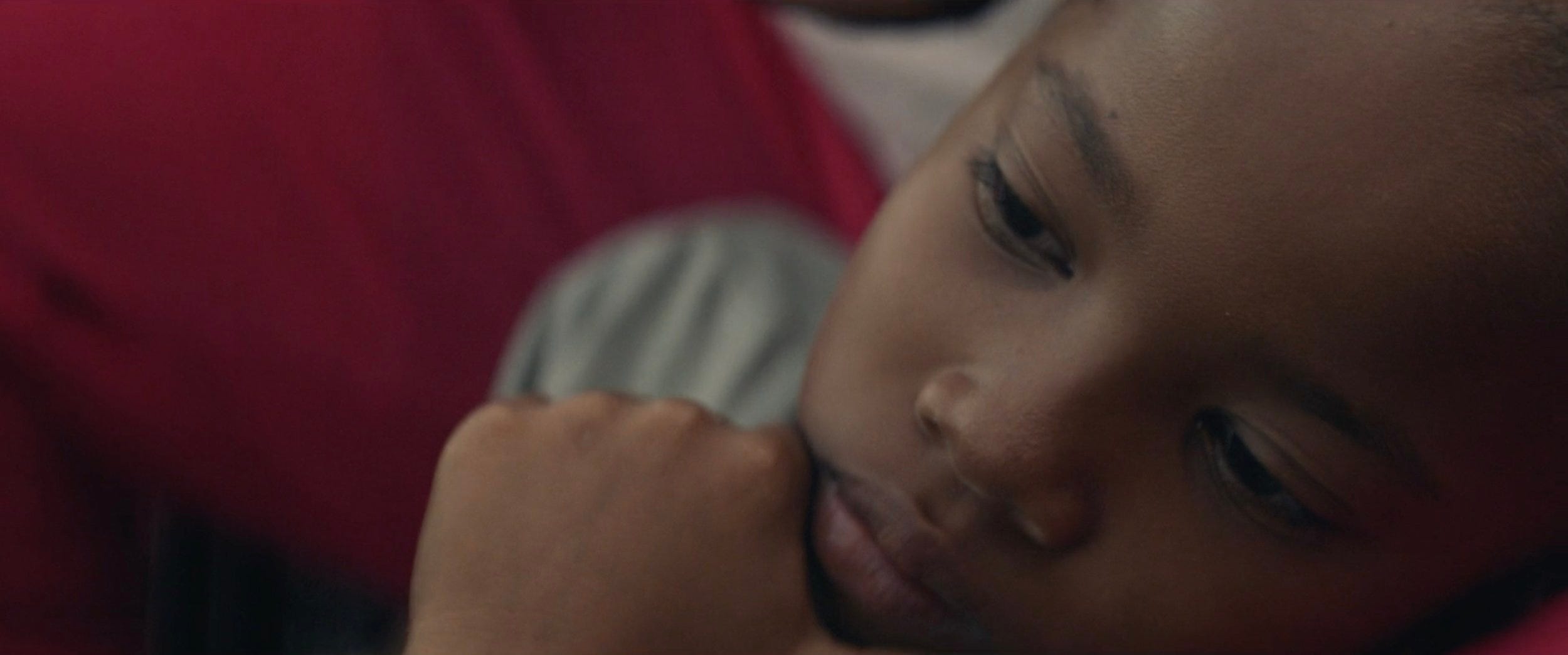
How is filmmaking protecting the future of culture? Video interview by the Global Landscapes Forum with documentary filmmaker of Dulce, Guille Isa. August 2020.
\
“No One Knows the Mysteries at the Bottom of the Ocean” Introduction by Katherine McKittrick & Clyde Woods
The storm-torn locations of les damnés—the unescaped, the abandoned, the immovable, the unseeable—are not anything new. They are disturbing reminders of, but do not twin, other racialized spaces: geographies, for example, occupied by the colonized, the enslaved, the incarcerated, the disposable.
Black geographies disclose how the racialized production of space is made possible in the explicit demarcations of the spaces of les damnés as the invisible/forgettable at the same time as the invisible/forgettable is producing space—always, and in all sorts of ways.
What Edouard Glissant calls “submarine roots”: a network of branches, cultures, and relations that position black geographies and the oceanic history of diaspora as integral to and entwining with—rather than outside—what has been called “coloniality’s persistence”. Conversely, should the pre-conquest and post-conquest geographic traditions of creating and preserving sacred places be abandoned? Are reclamation, preservation, and remembrance merely a question of re-enacting hegemony, or are these processes a defining feature of regional identity and humanity? The act of making corners, neighbourhoods, communities, cities, rural lands, rivers, and mountains sacred is central to their defence and the defence of the communities that love and cherish them.
The realization of these desires can transform the world when these visions are based in traditions that see place as the location of co-operation, stewardship, and social justice rather than just sites to be dominated, enclosed, commodified, exploited, and segregated. Black geographies will play a central role in the reconstruction of the global community.
\
One World in Relation (2010), Martiniquais philosopher Édouard Glissant.
The origin of my life has been swallowed up by the land.
So what does the collapsing mean to you?
It means to return to the depth.

Édouard Glissant’s For Opacity excerpt accompanying Malian philosopher and filmmaker Manthia Diawara’s video lecture (2019) of Glissant’s Demand for the Right of Opacity
The opaque is not the obscure, though it is possible for it to be so and be accepted as such. It is that which cannot be reduced, which is the most perennial (everlasting) guarantee of participation and confluence. We are far from the opacities of Myth or Tragedy, whose obscurity was accompanied by exclusion and whose transparency aimed at ‘grasping’. In this version of understanding the verb ‘to grasp’ contains the movement of hands that grab their surroundings and bring them back to themselves. A gesture of enclosure if not appropriation. Let our understanding prefer the gesture of giving-on-and-with that opens finally on totality.
Glissant writes against claims of fixed reductive and transparent identity and identification of colonized people. In essence, as Diawara illustrates, what Glissant articulates is that coloniality speaks to the colonized as follows: “I will reduce your complexity in order to understand you through comparison.”
This conception of opacity reminds me of notes I took sometime ago on Sylvia Wynter: once something becomes calculable and legible, it seizes to be free. To have calculability, it has to have legibility. To have legibility, it insists on availability, simplicity, and perhaps even translatability.
(Side: “Translation is impossible, … equivalence is a fantasy.” —Chang Yuchen)
Darkness can be opaque but opacity is not only to obscure. There is opacity in the light. Opacity is a signal for a place that is looking for its identity in relation and complexity. When it has found [that] place, it has found its freedom.
Opacity cannot be defined, nor commented on. But to demand opacity for all is to abandon the reductions of the world’s velleities (wishes) to the unique measure of a single transparency, to a single light…
On the other hand, if an opacity is the basis for a Legitimacy, this would be the sign of its having entered into a political dimension. A formidable prospect, less dangerous perhaps than the erring ways to which so many certainties and so many clear, so-called lucid truths have led. The excesses of these political assurances would fortunately be contained by the sense not that everything is futile but that there are limits to absolute truth. How can one point out these limits without lapsing into skepticism or paralysis? How can one reconcile the hard line inherent in any politics and the questioning essential to any relation? Only by understanding that it is impossible to reduce anyone, no matter who, to a truth he would not have generated on his own. That is, within the opacity of his time and place. Plato’s city is for Plato, Hegel’s vision is for Hegel, the griot’s town is for the griot. Nothing prohibits our seeing them in confluence, without confusing them in some magma or reducing them to each other. This same opacity is also the force that drives every community: the thing that would bring us together forever and make us permanently distinctive. Widespread consent to specific opacities is the most straightforward equivalent of nonbarbarism.
We clamor for the right to opacity for everyone.
sitting with this idea of opacity and the right to opacity. reflecting on my own internalized coloniality around not being able to accept or reconcile with my own opacity, and therefore projecting this rejection into criticism of the opacity (obscurity) I see in others. Can I accept the opacity in others if I do not first accept the opacity within myself?